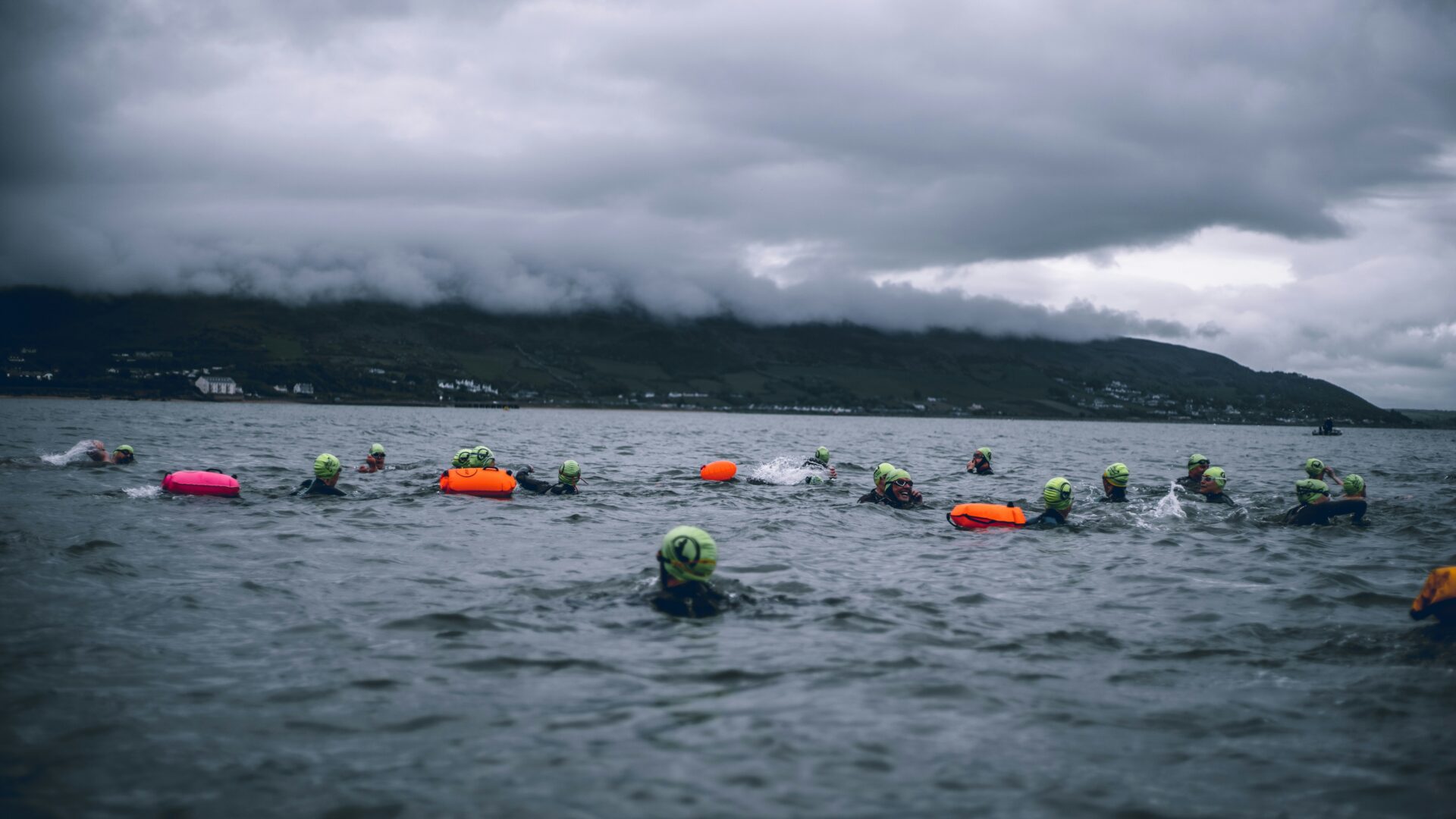
The swim is the part everyone talks about. The fifteen minutes afterwards is the part which decides whether you come back the next week smiling or shivering.
If you ask any open water swimmer what their best swim was, they’ll describe the water, the glassy calm just after dawn, the freezing cold that made them gasp, and the moment when they stopped thinking and began to swim. But when you ask them about their worst swim, it’s likely that the story starts as soon as they’ve got out of the water.
They’ll talk about freezing hands and not being able to get their socks on, shivering in the car with the heater on max, wondering why they felt colder than they did in the water.
Your post swim routine is not meant to be glamorous, the routine is what turns a one off dip into a hobby you can carry on with throughout the year. The catch is that the routine is seasonal. The thing that works perfectly on a lazy August evening could be comically bad on a grey January morning.
The basics that never change
No matter what the month, there are some habits you should develop right from your first swim, with consistency every week they will become second nature, which is precisely the effect you desire when your fingers cease to cooperate.
- Pack your bag in reverse order. The first items of clothing you put on after the swim should be at the top of your bag. And your towel should be positioned above everything else, it is the first thing you need after getting out of the water.
- Change as quickly as possible. Take off the wet layers and then cover your upper body.
- A warm drink and some food. If the resort where you swim has a cafe, get a hot drink or pack a flask with something warm and also pick up a nutritious snack that you can look forward to. Swimming outside uses up more energy than you imagine.
- Take good care of your equipment and your equipment will look after you. When you get home, rinse your kit in fresh water and make sure it dries thoroughly. Wetsuits prefer to be hung inside-out and stored away from direct sunlight.
- Stay a while and have a chat. As you’re drinking your warm drink, start talking to the other swimmers, you can make friends and you can learn a lot just by chatting with other likeminded swimmers.
Spring is the season which fools people
A certain type of spring day always manages to surprise people. The sun is shining, the daffodils are sprouting, you’ve finally taken off your winter coat after months of wearing it, and when you arrive at the water you feel as though summer has actually arrived.
The water hasn’t received the memo though. Lakes, rivers and the sea heat up much more slowly than the air, in spring you frequently find yourself swimming in water which is still near its winter temperature. The hazard isn’t the swimming itself but the temptation to treat the time after swimming as if it were summer. Sticking around in wet kit, having a chat on the bank in a t-shirt and leaving the flask at home.
My advice is simple. Keep your winter routine going until the water, not the weather, tells you to stop.
- Pack your drying robe and hat even if it feels silly.
- Check the water temperature in advance, before deciding what to kit to leave home.
- Enjoy the longer evenings, but get dressed before you settle in to enjoy them.
Summer is easy
This is the season most people fall in love with open water. Warm evenings, swims that stretch on for an hour, picnics on the shore and that wonderful heavy armed tiredness on the drive home. Getting cold is less of a worry now, so the routine shifts towards recovery and looking after yourself.
- Rehydrate. Longer, warmer swims mean you lose more fluid than you notice. Bring plenty of water as well as your flask.
- Check the water. Before you go, check the local water quality, particularly after heavy rain when runoff and overflows can affect it. In England, the Environment Agency publishes bathing water results, and apps like Surfers Against Sewage’s Safer Seas & Rivers Service give alerts.
- Refuel. Eat something proper within an hour or so. Your body has earned it.

Autumn gets a little trickier
Autumn might be the most beautiful time to swim. The water holds on to the summer’s warmth for weeks after the air starts to cool, and there is something magical about steam rising off the surface on a crisp morning. Many swimmers will tell you this is when they really learn to love it.
But autumn is also a season of change, and your routine needs to change with it. The water cools week by week, and at some point the air starts to feel kinder than the water. That is your cue.
- Plan for the dark. Light fades earlier, so lay out everything you need before you get in. If the place you swim at has no changing facilities, take a head torch. Changing in the dark with a phone torch is not a life goal to aim for.
- Dig out the winter kit. Drying robe, warm layers, hat, gloves and flask. Put it back into your bag before you think you need it, it’s better to have it and not need it.
- Keep swimming. Swimmers who keep going through autumn adapt to the cold gradually. If winter swimming appeals, now is the time to build towards it.
Winter is where the routine really matters
Winter swimming is extraordinary. The cold is fierce, the swims are short, and the feeling afterwards, that tingling, wide-awake glow, is like nothing else. It is also the season where your post swim routine stops being a nice habit and becomes essential.
Understanding afterdrop
Here is the bit which surprises new winter swimmers. You get out of the water on a massive high from having just swam in very cold water, but that soon fades and you begin to shiver more intensely ten minutes later. This condition is known as afterdrop.
In cold water the body draws the warm blood towards the centre of your body in order to protect your vital organs, which causes your arms, legs and skin to become very cold. After you have got out and start to warm up, the cold blood from your arms and legs begins to circulate again throughout your body and your core temperature continues to drop, usually for ten to thirty minutes after you have left the water.
Knowing your body works this way is half the battle.
There are plenty of very interesting articles online which describe this phenomenon in detail.
A winter routine which I swear by
- Dress fast. Aim to be dressed within a few minutes. Top half first, hat on, then the rest. Do not stand around chatting in your swimming kit, however good the conversation.
- Layer up and dress like a cabbage. Multiple thin layers trap more warmth than one thick jumper. Fleece lined pants and thick socks are your friends. I can’t take credit the “dress like a cabbage” phrase, I heard it from the TV presenter Simon Reeve.
- Warm yourself from the inside. Sip a warm drink and eat something sugary.
- Wait before you drive. Do not drive until you have stopped shivering and feel properly warm. Afterdrop can creep up on you behind the wheel.
- Go gently with heat. It is tempting to jump straight into a hot shower or bath when you get home, but rapid heat can make you feel faint as your blood vessels open up. Warm up gradually instead.
Your year-round kit list
A simple way to keep on top of all this is to keep one bag packed and adapt as the seasons change.
- Every swim: towel, flask, snack, water bottle, drybag for wet kit.
- Add in summer: sun cream, extra water, something to sit on.
- Add in spring and autumn: drying robe, hat, gloves, thick socks, layers, head torch.
- Add in winter: all of the above, plus extra layers for added warmth.
The swim after the swim
It is easy to think of the post swim routine as a chore to get through before the next swim. But spend any time in open water and you will see it is an essential part of swimming life.
Get the routine right and you will find yourself looking forward to it nearly as much as the swim itself.
Open Water Post Swim Kit
When it comes to choosing kit for off the water there is a lot of choice. But here is some kit I love and some tips to help you choose:
Drying Robe:
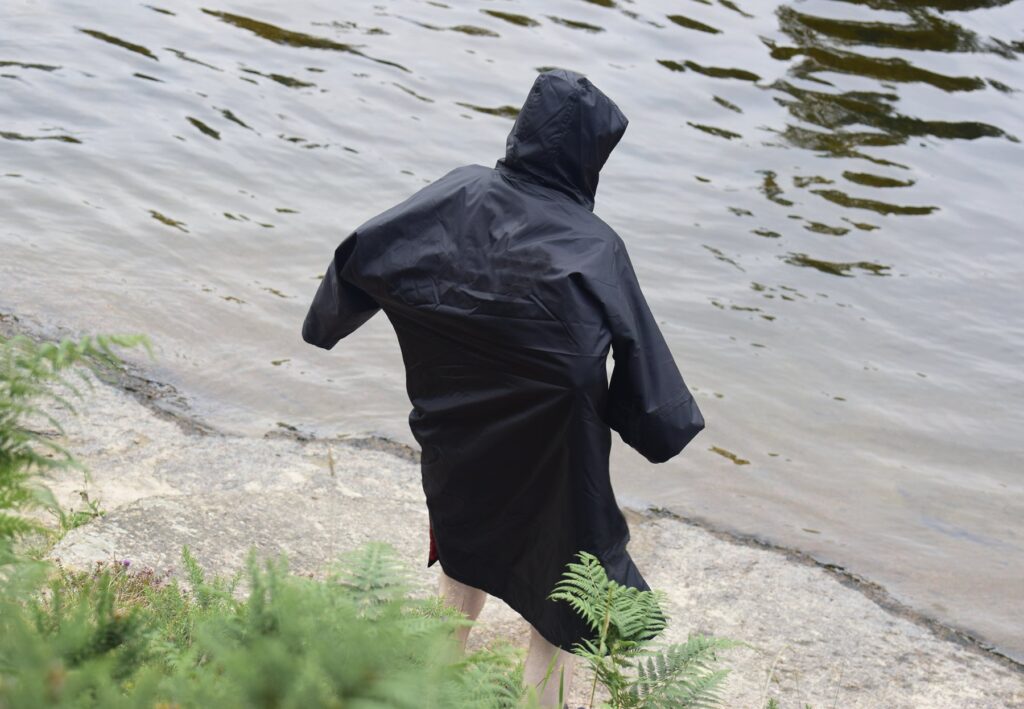
Mine is several years old and is still brilliant. The outer shell is waterproof and the inner material keeps you warm whatever the weather is doing. When choosing a dry robe, look for plenty of space to manoeuvre around inside, you’ll be able to get changed comfortably without taking the robe off temporarily.
Head Torch:
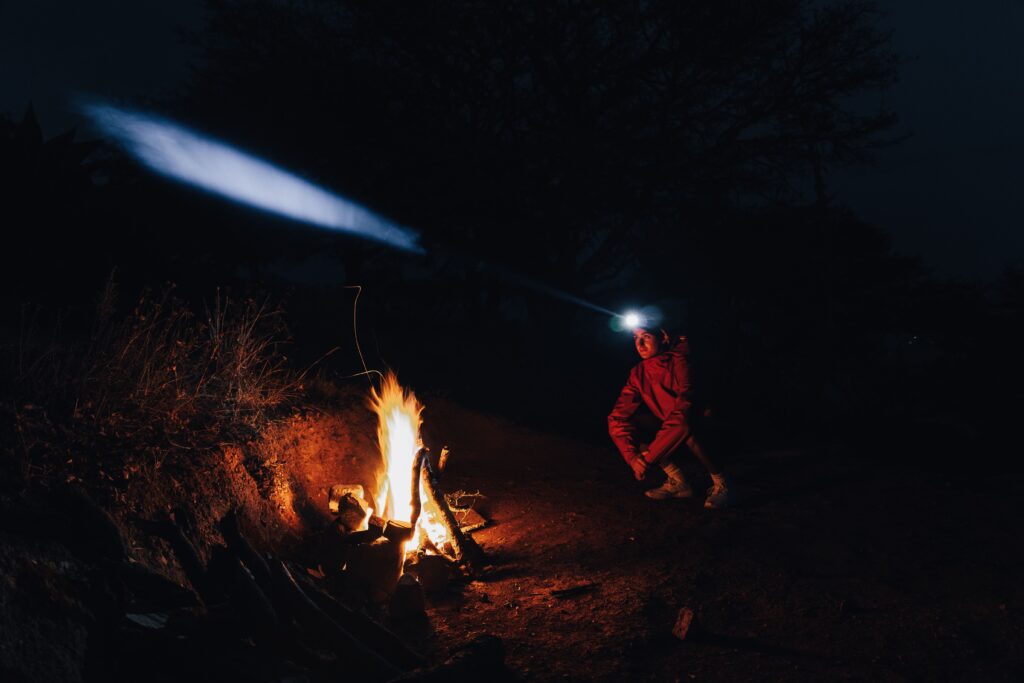
I’ve worked my way through quite a few torches over the years, pretty much any model from Petzl is going to be good. I’m a big fan of the rechargeable range of torches too, according to the website the CORE rechargeable battery has a lifespan equivalent to 900 standard batteries.
Buy Petzl Head Tourch buy here
Geeky life advice: buy a spare torch and leave it in your car, it’ll come in handy one day when you have a flat tire and it’s dark.
Hat:

Mine is this exact style but in different colours (photo below). I do like Barts hats and plenty of outdoor shops stock them up and down the UK. You don’t need to pick the same brand though as there is so much choice out there. My advice is to a buy a fleece lined and brightly coloured one.
Some more geeky life advice: with a colourful hat, people are more likely to spot you if you’re out in the mountains and visibility fades.