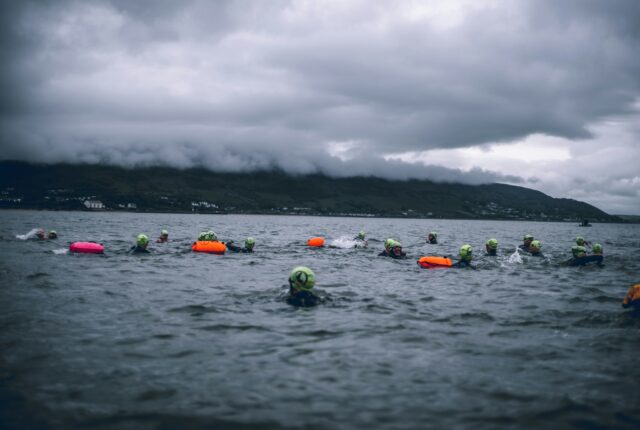
There’s something incredibly special about swimming outdoors. You get to escape the noise of everyday life, experience the landscape from a completely different perspective and, for a little while, have nothing but the water around you.
If you’ve never tried open water swimming before, it can seem a little daunting. I’ve put this guide together to explain what you need to know to get started and, hopefully, encourage you to give it a go.
Why I love open water swimming
Imagine the chance to see the world from a completely different perspective.
There’s something incredible about being out on open water, looking back at the landscape from the middle of a lake. Everything looks different. The familiar becomes something new, and for a moment, the world feels so much bigger.
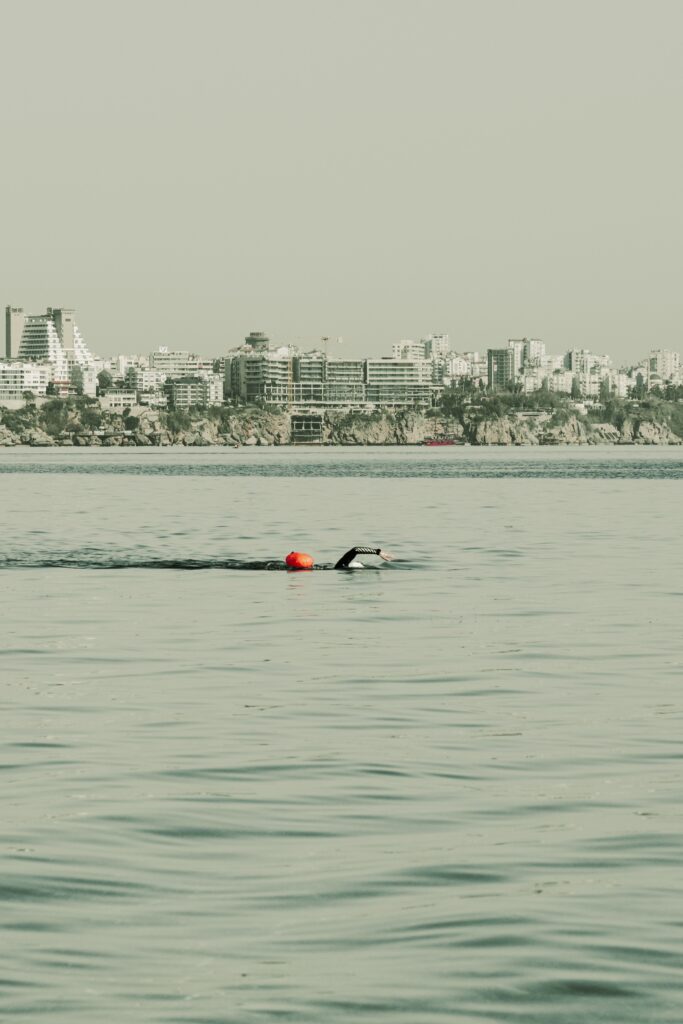
And of course, there is the thrill of realising just how small humans are. Compared to the vastness of the lake, I’m just one tiny human surrounded by kilometres of water and metres of depth beneath me. It’s both scary and exhilarating. You can’t help but feel a little sense of adventure every time you go out.
But perhaps my favourite part is the escapism. We spend so much of our lives surrounded by technology. Messages, emails, phone notifications, there’s always a way for someone to reach us. Then you get into open water, swim away from the shore, and suddenly… it all disappears. No notifications. No distractions. No one asking anything of you. Just you, the water, the rhythm of your breathing and the landscape stretching out around you. While I am out swimming, the outside world can wait.
And honestly, what better way to start the day or leave a busy day behind?
Is it right for you?
I can’t say whether you’ll love or hate open water swimming, but you’ll never know yourself unless you try. Like with most things in life, you can achieve so much just by having a go.
One very important requirement is that you already have a basic swimming ability. Open water doesn’t have the shallow boundaries of a swimming pool, so is not the right environment for learning to swim. Don’t let this put you off though, have some swimming lessons in a pool, then head for the great outdoors.
How to choose a location
While you’re learning and building confidence, I recommend swimming with an organised group who can provide safety boats. A quick Google search will help you to find a company who organises open water swimming sessions on a lake near you. As a minimum requirement for your first open water swim, select a company who provide safety for the session. If safety isn’t provided, keep searching for a company which does provide it.
When to swim?
When you’re getting started, stick to open water swimming from late Spring through to early Autumn. Even in the height of summer in the UK, the water is cold. By the time the clocks change, the water is very cold. Lots of people swim year-round, but my advice is not to start your open water swimming adventures when the water temperature is at its harshest.


What equipment is needed?
You’ve found a suitable location, now you need to buy or hire some kit.
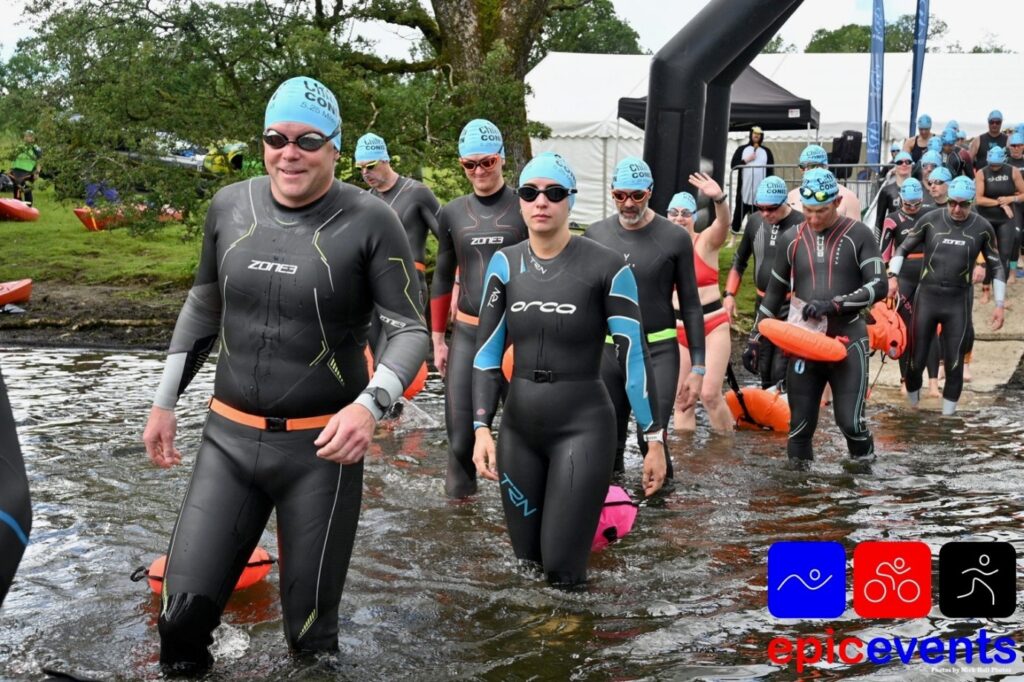
A lot of organisations will insist on you wearing a bright cap and attaching a tow float. Whilst not everyone’s favourite pieces of kit, from any rescuers angle, they need the best chance possible to see you on the water. From your angle as the swimmer, if you do get into difficulty, a tow float will give you the best chance possible to stay buoyant until help arrives. A cap can be purchased inexpensively; and if you want to keep costs down for your first adventure, a lot of organisations will let you hire a tow float.
Unless you plan to swim with your head out of the water for the entire time, you will need a pair of goggles. Entry level goggles are inexpensive. Once you get more into open water swimming and start going out in all weathers, you can level up with additional features such goggles moulded to the shape of your face, or tinted for when the sun is shining.
The final thing to consider is what to wear. When getting started wear a wetsuit with trunks/swimsuit underneath. Wetsuits are one of those pieces of kit where you can spend very little or easily end up in four-figure territory. There’s no “best” wetsuit either, different suits work for different swimmers. I’d recommend not rushing into buying one before your first open water swim.

There are a lot of variables to consider, and you won’t necessarily know what works for you until you’ve been in the water. Instead, I’d recommend hiring one to begin with. You’ll get some advice as part of the hiring process, and, more importantly, you’ll have the chance to find out what works for you before you part with your cash.
Wetsuit chaffing is a problem for everyone. There is just no way to avoid the wetsuit rubbing your skin. But luckily there are any many products available to prevent this which are kind to your skin and kind to the wetsuit material. Get yourself a tube of wetsuit lube and apply this generously around your neck.
What to expect on your first swim
The first thing you’ll probably notice is how cold the water is, take your time and get in the water slowly, allowing your body to adjust to the temperature before you start swimming.
Once you’re in the water, hopefully you’ll start to experience the peace, excitement and freedom I’ve talked about. While you’re out on your swim, take a moment to stop and tread water while holding onto your tow float. Look around, take in the scenery and appreciate the unique perspective that being out on the water gives you.
You’ll also notice some differences between pool swimming and open water swimming. In a pool it is very easy to swim in a straight line just by keeping your eye on the floor tiles. In open water, you need to use a technique called sighting, where you look ahead frequently to keep yourself swimming towards the next buoy or marker on the course. It might feel a bit strange at first, but you’ll soon get used to it.
What next?
Like with any sport, as you start to build confidence with open water swimming, you will probably start to upgrade your kit. You might want a wetsuit upgrade, a few pair of goggles for different weathers, or a different tow float where you can store and access food while you’re swimming.
You might love swimming so much that you want to enter swim events or set yourself a personal challenge. There are many organised events throughout the UK in the warmer months. Alternatively, if you would prefer to take on a challenge independently, there are companies who provide pilot boats to support end-to-end swims across open water.
The kit
Here is my list of trusted kit which I use on nearly every open water swim:
Wetsuit: Zone 3 Aspire Wetsuit
Tow Float: Zone 3 Safety Buoy Dry Bag
Wetsuit lube: Anti Chafing Balm
Goggles: Racing Goggle Black
I’m a big fan of Zone3 and Huub, the kit is reliable and built for performance. Some other brands I like are Speedo for trunks and Orca for gloves & socks once the temperature drops.
Some Practical Safety Tips
I love open water adventures and would recommend it to anyone, but open water deserves respect. These are the simple rules I follow to stay safe:
- Acclimatise first. Never jump straight into open water. Cold water shock can affect even strong swimmers.
- Check the weather. If thunderstorms or lightning are forecast, stay out of the water.
- Know what’s beneath you. Reservoirs can contain hidden machinery, so never swim where you’re unsure what lies below.
- Know your exit points. Before getting in, make sure you know where you can safely get out.
- Wear a tow float. It provides extra buoyancy if you need to stop or rest, and most organised swims require one.
- Don’t swim alone. Swim with other people or where safety cover is available.