There are some Friday evenings when we’ve finished work, had an easy dinner, and thought, shall we go?
That’s when having the van makes sense.
We’ve had ours for three years now and I think that’s what I like about it most. It’s not that every weekend needs to involve a van trip, we don’t live in ours. But when we want a simple two-night escape, it’s there ready to go.
Three years in, we’ve used it enough to know what works for us, what doesn’t and what was worth spending money on.
Make the van work for how you actually use it
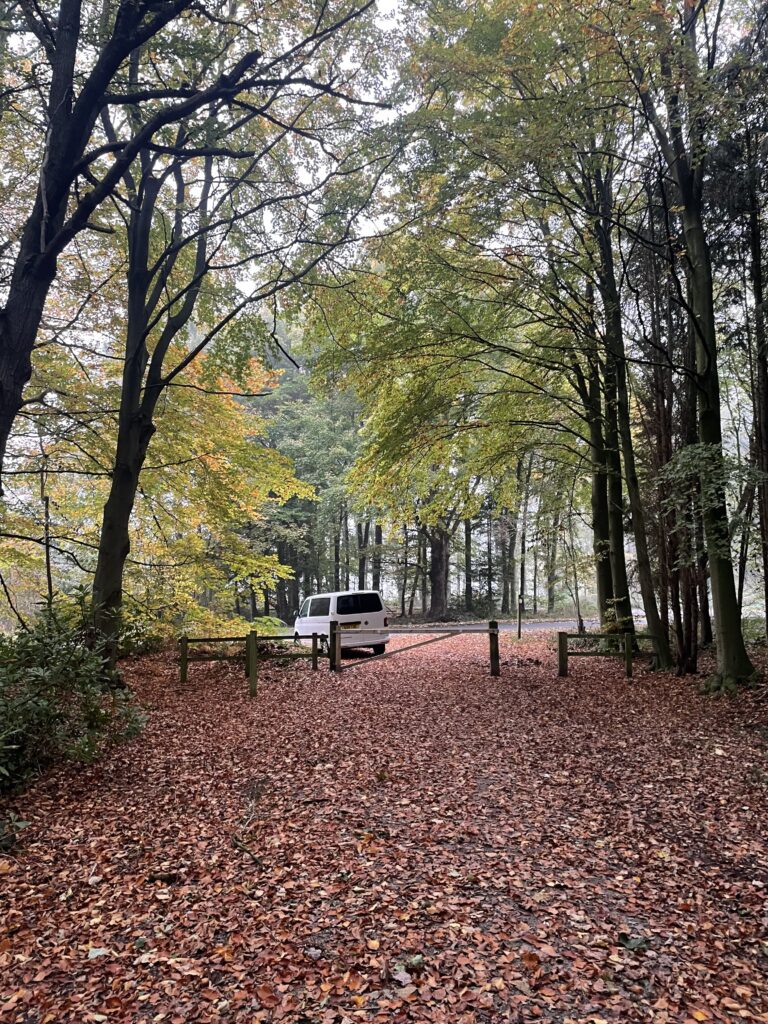
Our white VW Transporter started life as a works van. When we bought it, there were no rear windows and the back was fitted with metal shelving and hardwood throughout. The potential was definitely there.

We’d always enjoyed camping in our tent but after bringing Ludo home, our almost six-year old Labrador, we wanted something more practical.
We committed to converting the van ourselves. We had windows fitted professionally but the rest was on us. We stripped the existing rear interior, built new cabinetry, insulated the walls and added plywood panels. Then came the felt, by far the worst job.
Awkward corners around windows and roof, strong adhesive, and the challenge of trying to get it to sit flat. My husband felted the entire rear interior, having done it once, he’ll happily pay the experts next time.
We added bench seating that converts into the bed, cabinets for storage and wood-effect lino flooring. The lino was a particularly sensible decision given every trip includes the pup.
Three years on and we’re particularly pleased with the cabinets and seating/bed frame. There are things we’d change though. A lot of the larger storage spaces open from the outside as we were trying to make the most of the limited space inside.
This works well until the weather turns.
Then you’re standing outside getting wet, trying to pull out the bulky blankets you crammed in there. It’s one of those things you only discover once you start using what you’ve built. If we were doing the build again, we’d prioritise storage with inside access.
You probably need less than you think
One of the easiest ways to make a weekend campervan trip feel like hard work is to pack too much.
For two nights, we keep things simple. Once the staples are organised, our Friday routine is straightforward; shower, change, pack the pyjamas, toiletries, a change of clothes, Ludo’s food and grab the Scrabble.
There are a few things that permanently live in the van to make this Friday decision much easier. Nothing particularly exciting but exactly the sort of thing you don’t want to have to test your brain with after a long work week: cutlery, the kettle and gas canister, tea and coffee, bedding and blankets.
That’s not to say we remember everything, every time. Forgetting the gas canister after we’d taken it out to refill, was a particularly impressive failure. The disappointment at missing out on the morning coffee did not set the right mood for the day.
Three years in, we’re still learning.
Spend money on the things that actually make a difference.
It’s easy to step into GoOutdoors and purchase every ‘essential’ before your very first trip to help you feel prepared. The down side to this method is space.
After just a couple of trips you quickly establish what really will make a difference.
For us, the mattress topper has been among the best purchases.
When you’re sleeping in a small space, good sleep matters. There are things you can compromise on for a weekend but waking up tired, having slept on a plywood bed isn’t one of them.
The external blackout screen has also been a genuinely useful addition, particularly when the early morning light rises before we’re ready for it.
The least useful purchase?
Our VW leather seat covers.
They did give our ex-work van an instant upgrade and weren’t extravagantly priced but they’re certainly not a campervan essential.
Don’t underestimate a close-to-home trip
One of our favourite lessons in our three year van ownership is that we’ve learnt a good campervan weekend doesn’t need to include hours of driving.
Our usual locations are in and around the Yorkshire Dales, the East Coast and slightly further north to Alnmouth and the Scottish borders. Ravenscar on the Yorkshire coast is a good example.
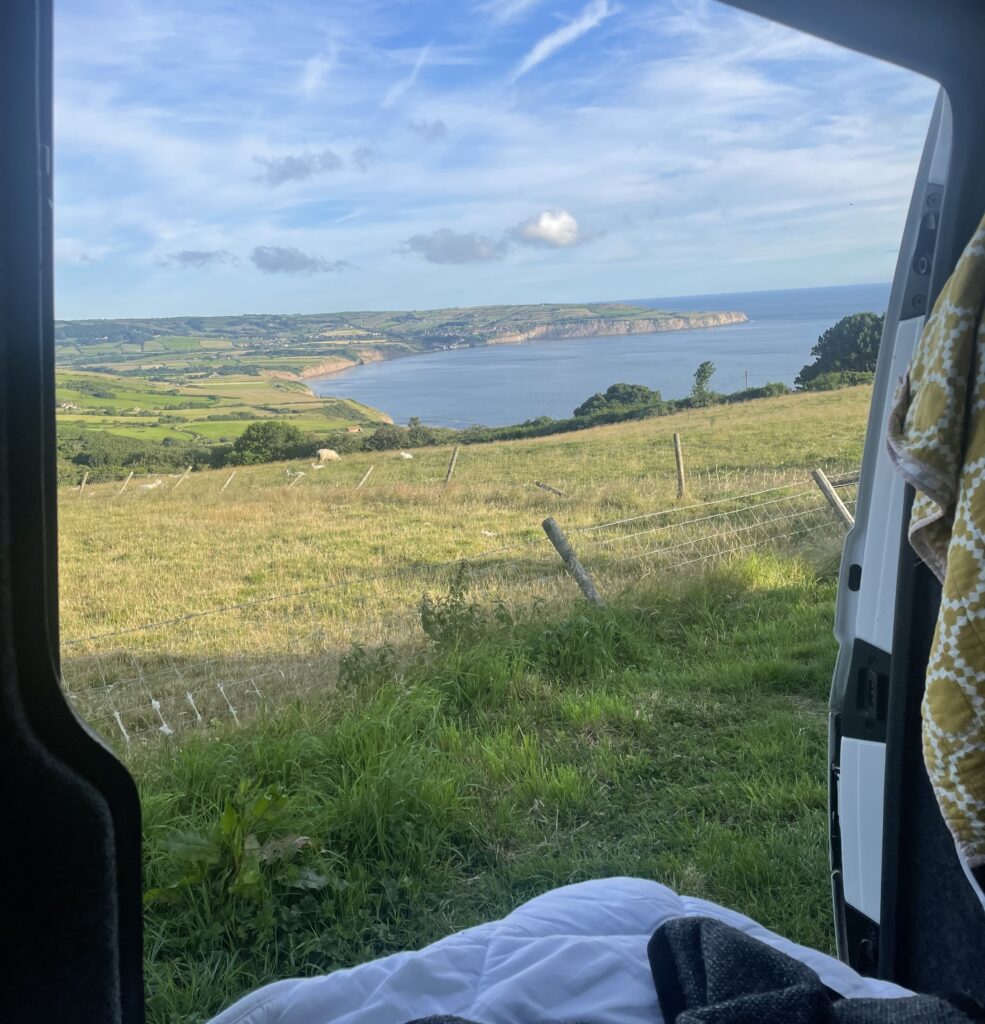
We’ve both wild camped and stayed at a campsite there. We arrive on Friday early evening, head out for a walk along the coast path, settle in the van with an exceptional view of the ocean and get an early night. It means Saturday is about the walk and the location rather than another drive.
Ravenscar to Robin Hoods Bay is one of our favourite routes. Spectacular views along the cliffs, a beach stop for Ludo, lunch and a slow walk through the winding streets before making our way back. It’s simple but that’s the point. Another cosy night in the van with tired legs and a tired pup and we’re home by lunchtime on Sunday.

Know what makes a place feel right
We’ve tried campsites and wild camping, and while wild camping can be brilliant when you find the right location, we have become particular about what makes it so.
A wild camping spot doesn’t want to be directly beside a road (no laybys!), somewhere with a bathroom is an instant win and a good view is a bonus. If either of us feels uncomfortable, we move on.
When it comes to campsites we tend to look for quiet and spacious which often falls into the farm stay category rather than holiday park. Adult only sites are few and far between but there are some that are fairly distinguishable as the perfect spot for dinkfolk.
Three years in and the best thing is still being able to decide to just go
Before the van conversion was even finished, we took our first overnight trip. It was before the insulation, before the external blackout cover and mattress topper. We simply decided to head in the general Yorkshire Dales direction, found somewhere with an exceptional view to park and stayed.
It was basic but it worked.
We still don’t use the van every weekend, sometimes an Airbnb with a proper bed and a private bathroom is exactly what we fancy. But there are also those Friday evenings when work has been tough and two nights away is what we need to reset.
The van makes that a remarkably easy option.
If you’re thinking about getting one but feel concerned about the investment being worth it, our experience is that once you have it, you’ll make the investment worth every penny.